Why Some California Schools Get Three Times More Funding Than Others
School funding in California steers a lot to wealthy districts and to those with high-needs students. Those in the middle get a lot less.

;)
Education news and commentary, delivered right to your inbox.
Sign up for The 74 newsletter.
Get stories like this delivered straight to your inbox. Sign up for The 74 Newsletter
This story was originally published by . for their newsletters.
At Pinedale Elementary in Fresno, there’s almost no classroom aides, after-school tutors or behavioral counselors. Literacy activities and parent workshops are scarce. Field trips? Almost non-existent. The school survives on one of the lowest per-pupil expenditures in the state: $16,700 a year, nearly $5,000 below the state average.
Less than two miles away, it’s a different story at Kratt Elementary, which is in a different school district. Kratt has almost identical demographics — predominantly low-income and Latino — but gets $25,000 per student and has the amenities to show for it.
And a few hours west in the Bay Area, you’ll find Portola Valley Elementary, which spends almost $46,000 per student annually. It offers music and art classes, mental health counselors, small class sizes and state-of-the-art facilities.
The way California’s school funding works, schools with large numbers of students who are low-income, English learners, homeless or in foster care get extra funding. Schools in wealthy areas get less state funding but make up for it in local property taxes and parent donations. But those in the middle? They get much less money overall.
“When I saw what other schools provide, I was like, what?” said Tania Galeana-King, a mother of three and parent volunteer at Pinedale. “As a parent, it’s really frustrating. I’ve heard of No Child Left Behind, but this is like half the kids left behind.”
Low funding, low test scores
When California adopted the Local Control Funding Formula a little more than , the idea was to bring equity to school funding and ensure students with the most needs got more support. But soaring costs, declining enrollment and inflation have led to gaping disparities in school funding.
Those in the wealthiest areas, such as Portola Valley, Menlo Park and other Silicon Valley enclaves, are typically “basic aid” districts, meaning they get most of their funding through local property taxes. Parents chip in the rest, often millions of dollars a year.
School districts that are not basic aid get their money through the state’s Local Control Funding Formula, which includes a base grant plus extra money depending how many students are low-income, English learners, homeless or in foster care. If more than 55% fall into that category, districts get even more money.
That’s why Fresno Unified, where Kratt Elementary is located, gets significantly more money than Pinedale Elementary, which is located in Clovis Unified. Clovis, where just under half the students are considered high-needs, receives little extra funding.
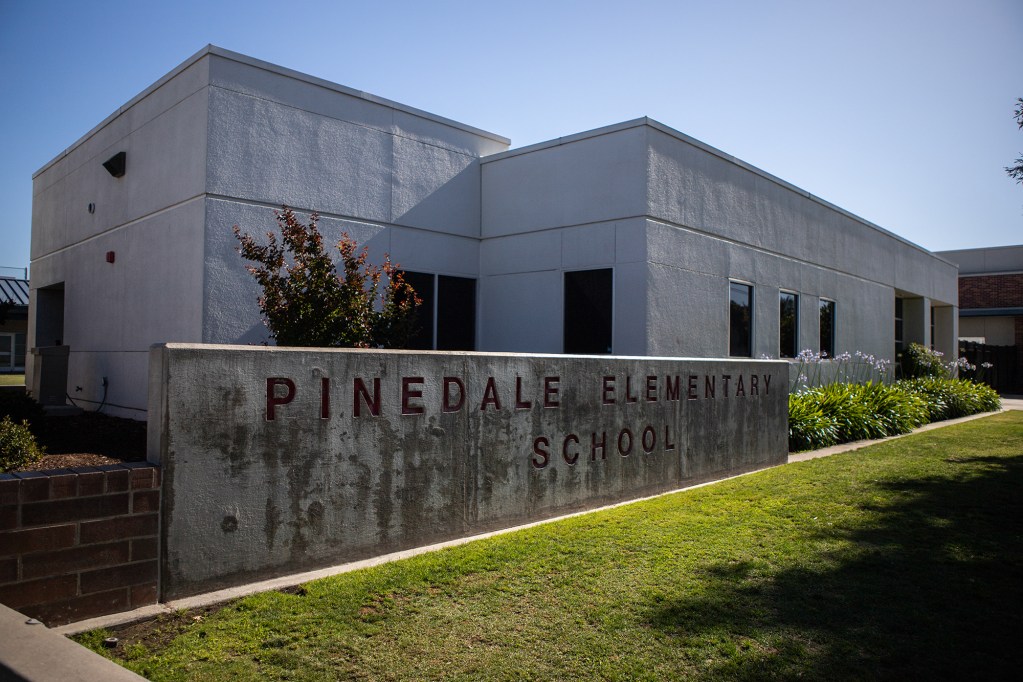
The consequences of the funding disparities are reflected in students’ test scores. At Pinedale, fewer than 30% of students met the state’s English language arts standard last year. Only 23.5% met the math standard. Kratt students scored 5 to 10 percentage points higher on both tests. At Portola Valley, about 85% of students met the standard on both tests.
“I’d say the problem is urgent,” said Michael Johnston, associate superintendent at Clovis Unified, noting the impact on student learning at schools with less funding. “For many, many years, these kids have not gotten the same resources, and every year that goes by, it gets worse. It’s a group of students we are not treating fairly, and there needs to be a solution.”
Solutions in Sacramento
A seeks to fix the problem. Authored by Sen. , a Democrat from San Jose, Senate Constitutional Amendment 5 would create a reserve account funded by surplus tax revenues in economically flush years. After the state doles out its Proposition 98 money — California’s primary vehicle for funding schools — every year, it would give extra funding to schools that aren’t in basic aid districts. The money would come from the interest generated on the reserve account. As the account grows, the extra funding would grow.
“Over time, we think this bill can certainly stop the bleeding,” said Cortese, whose district includes a dozen basic aid districts. “If we do nothing, the problem is just going to get worse and worse.”
Cortese’s bill would amend the state constitution. If it passes the Legislature, the proposal would appear on the fall ballot.
Gov. Gavin Newsom’s also attempts to address the problem, providing almost $1 billion more toward school base grants.
That’s good news to the Association of California School Administrators. Although the money isn’t enough, it’s a start, said Naj Alikhan, the organization’s spokesman.
“(We) strongly support efforts to raise the base grant,” Alikhan said. “The LCFF base grant is the foundation of school funding in California, and increasing it is one of the most effective ways to provide schools with greater stability, flexibility, and capacity to meet local needs.”
Another bill, put forth by Assemblymember , a Democrat from Chula Vista, would expand school , but some worry that it would actually make funding shortfalls worse for some districts. Instead of raising the base grant, the bill would redirect more money to schools with large numbers of high-needs students.
Cutting the basics
David Roth, superintendent of Buckeye Union Elementary School District in El Dorado County, has gathered a cadre of school administrators to oppose Alvarez’s bill and fight for an increase in the base grant.
He’s created a database called , which calculates school districts’ funding disparities over the past 15 years. About 25 parent organizations and 60 small and mid-sized school districts have signed on to support Roth’s campaign. Among the largest: Clovis Unified, Fremont Unified, San Ramon Valley Unified and Murrieta Valley Unified.
“We support the idea that some student populations need more resources. At the end of the day, we’re all underfunded,” Roth said. “But the base grant has not kept up with escalating costs, and districts are falling further and further behind.”
Buckeye, a K-12 district in the Sierra foothills, receives only $15,100 per student, far below the state average of $21,000. The district has pockets of wealth, but also areas of poverty. Because of low per-pupil funding the district is in jeopardy of losing long-standing programs that serve all students, Roth said.
If base funding doesn’t improve, Roth anticipates cuts to P.E., libraries, counselors and music in the next few years.
“In my mind, these are the basics,” Roth said. “We’re patching things together now with bubblegum and shoestrings, but that can’t last forever. Soon we’ll be unable to fund a reasonable education program.”
‘There’s such a demand’
Pinedale Elementary is in a working-class neighborhood in north Fresno with no sidewalks and a smattering of crime and homelessness. Galeana-King described the area as tough but close-knit. “Everyone looks after each other,” she said.
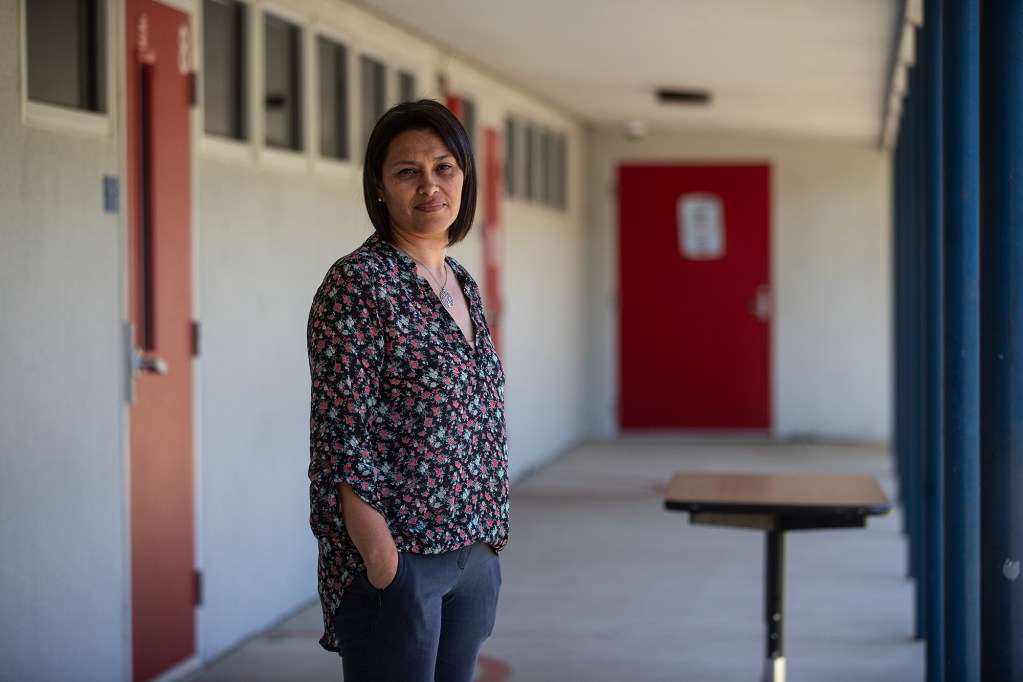
Galeana-King has been a parent at Pinedale for 15 years — all three of her children attended the school. She volunteers in the classroom and is active in the parent club, which raises a few thousand dollars a year through after-school snack sales, a salsa festival, jog-a-thon and other events.
But it’s not easy raising money in a community where most parents work multiple jobs to make ends meet.
“We have to be understanding,” Galeana-King said. “We want families to participate, but we need to be reasonable. People are struggling.”
Teachers often pay for classroom supplies out of their own pockets, while the parent club pays for things like new chess boards for the chess club and the second-grade field trip to Monterey. But the needs are endless. If the parent club could raise more money, they’d like to provide snacks for the classrooms, new sports equipment, backpacks for students and other amenities.
“I’m incredibly proud to send my kids to Pinedale. It might not always have the most financial resources, but it has a school full of people who deeply care about and love the kids,” she said. “That said, our students and staff urgently need more support.”
This article was and was republished under the license.
Did you use this article in your work?
We’d love to hear how The 74’s reporting is helping educators, researchers, and policymakers.